See how China order fulfillment works for DTC brands, from supplier receiving and quality checks to order syncing, pick and pack, customs and delivery.
China Order Fulfillment Process: A Step-by-Step Guide for DTC Brands
A DTC brand might manufacture in China, sell through Shopify, and ship to customers in the US, Europe, Canada and Australia — all at once. The manufacturing and the selling are the easy parts. What’s hard is connecting them: getting inventory received and tracked correctly, getting orders into the warehouse without address or SKU errors, and getting the right item picked, packed and shipped on a route that actually works for the destination.
A China order fulfillment service handles that connection from a warehouse near the brand’s suppliers. Instead of importing all their stock into one overseas market before they know where demand will actually land, brands can hold inventory in China and ship individual orders out to wherever the order came from. For a broader look at how fulfillment fits into a Shenzhen-based supply chain, see our guide to Shenzhen warehouse and 3PL services.
This guide walks through how that process actually works — what needs to be set up before the first order ships, what happens to an order between checkout and delivery, and when China-based fulfillment makes more sense than an overseas warehouse.
What Is China Order Fulfillment?
China order fulfillment means storing finished products in a Chinese warehouse and shipping them to customers as orders come in. The supplier delivers inventory to the fulfillment center, the warehouse receives and checks it, and it sits in storage under SKU until the brand’s store sends through an order. From there, the warehouse picks, packs and ships the parcel, and sends the tracking number back to the brand’s system.
Manufacturing and sourcing happen upstream of this. They’re closely related, but the fulfillment process itself starts the moment finished inventory lands at the warehouse. For DTC brands sourcing from multiple factories, a China consolidation shipping service can combine supplier deliveries into a single inbound flow before fulfillment begins.
Before Fulfillment Begins
The groundwork here matters more than it looks — sorting it out after thousands of units have already arrived tends to mean relabelling, repacking and shipping problems that were avoidable.
Start with a clear SKU structure. Every size, color, model and bundle needs its own identifier — if two near-identical products share a vague description, picking errors become a matter of when, not if, as order volume grows. The warehouse also needs real product data: weight, dimensions, material, declared value, and anything relevant to storage or shipping — batteries, liquids, powders and magnets in particular often need different handling and different shipping routes.
Packaging requirements should be settled before goods arrive too — whether orders need a branded box, a mailer, an insert, a thank-you card or a promotional gift. And it helps the provider prepare storage space and shipping channels in advance if they know your main sales destinations, expected monthly volume and delivery expectations up front, rather than finding out order by order.
The Fulfillment Process, Step by Step
1. Suppliers Deliver Inventory to the Warehouse
Once production is done, the supplier ships the finished goods to the fulfillment warehouse, using the address and reference code (customer code, PO number) the brand provides. One brand might have several suppliers feeding the same warehouse — the main product from one factory, retail boxes and promotional gifts from others — all managed under a single fulfillment account, arriving on their own schedules rather than all at once. For brands handling multiple supplier relationships, our overview of supplier consolidation in Shenzhen explains how to coordinate staggered deliveries efficiently.
2. Receiving, Inspection and SKU Storage
When inventory arrives, the receiving team confirms which order it belongs to, counts cartons, and checks for visible damage. It’s worth knowing that this basic receiving step isn’t the same as a real inspection — receiving confirms the shipment arrived, not that every unit inside is correct. A proper product verification means opening cartons and checking quantities, colors, models and accessories; a full quality inspection goes further into function and condition. HUIXIN offers both sampling and full inspection, with arrival and inspection photos uploaded to a connected system so you can review remotely — and if something’s wrong, the supplier can be contacted while the goods are still in China, which is a lot cheaper than sorting it out after delivery.
Once approved, products go into storage under their SKU. This separation matters most for brands with many similar variants — nobody picking an order should have to guess whether two nearly identical items are actually the same SKU. HUIXIN typically offers up to one month of free storage; the exact terms depend on product type and volume, so it’s worth confirming with your sales rep before goods start arriving. For more on how storage terms work in practice, see our guide to flexible warehouse storage in Shenzhen.
3. The Store Connects to the Fulfillment System
For fulfillment to run without daily manual work, the brand’s sales channel needs to feed orders into the warehouse system directly — SKU, quantity, address and shipping method — rather than the seller downloading orders into spreadsheets and emailing them over. Depending on the platform, this usually happens through a store integration, an API, or another agreed upload method. Once connected, the system checks stock availability, queues the order, and returns a tracking number once it ships. For platform-specific guidance, see our e-commerce order fulfillment overview for Shopify, Amazon and TikTok.
4. Order Review Before Picking
Before an order reaches the packing table, it gets checked: is the SKU and quantity actually available, is the address complete, does the postal code match the destination format, and does the selected shipping route actually accept this product (a battery or liquid item may need a different route than an ordinary accessory). Special instructions — a welcome card for first-time buyers, a gift for a promotion, bundling for multi-item orders — get flagged here too. Catching a missing apartment number or an incomplete address now is a lot cheaper than catching it after the parcel has already shipped.
5. Picking and Verification
A warehouse employee locates the SKU and pulls it to the processing area. This sounds trivial for a single-item order and gets genuinely risky the moment a brand sells several colors or visually similar models. A reliable process verifies the SKU, quantity and variant before packing — barcode scanning, a second manual check, or both — and checks product condition at the same time, pulling anything with a crushed box or visible damage out of normal stock. Picking errors are expensive in a way that’s easy to underestimate: the customer’s disappointed, and the brand usually eats the cost of a replacement shipment — one that, for international orders, has to cross a border twice.
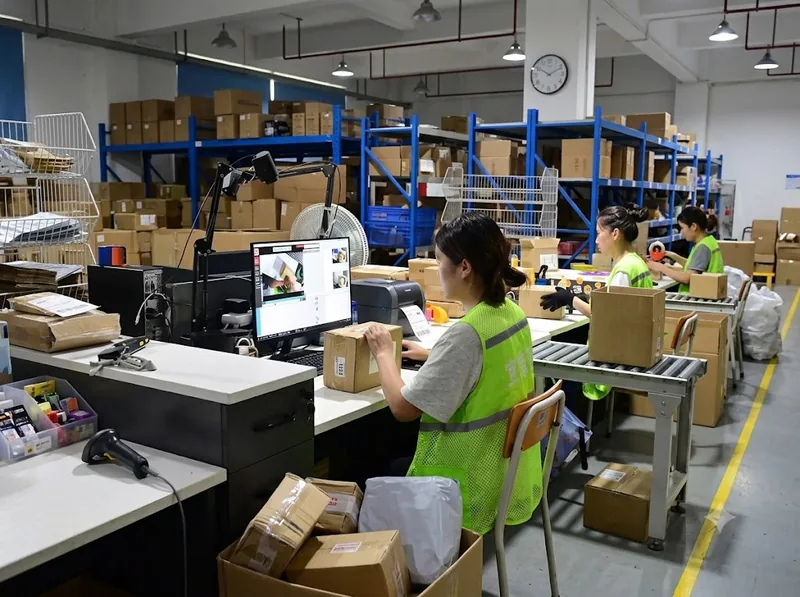 Pick, pack and ship operation at HUIXIN Shenzhen fulfillment center
6. Packing for Protection and Brand Experience
Packing has to do two jobs at once: protect the product through several sorting facilities and customs handling, and control shipping cost. The warehouse chooses packaging based on weight, size and fragility — a mailer for a soft accessory, a reinforced carton for something fragile — but oversized boxes push up volumetric weight, which cross-border small-parcel carriers charge for directly. On top of that, packing is often part of the brand experience: custom boxes, printed mailers, instruction manuals, thank-you cards, promotional gifts. HUIXIN handles labelling, kitting and branded order prep — assembling sales sets, inserting gifts into qualifying orders — with the goal of protecting the product and presenting the brand without adding shipping weight that doesn’t need to be there.
7. Shipping Route and Customs Preparation
The right shipping route depends on destination, weight, product type and how fast the order needs to arrive — a light accessory to the US might use a different channel than a heavier item to Germany. HUIXIN mainly works through cross-border small-parcel fulfillment, which fits DTC brands shipping individual orders internationally from China-held stock. For a detailed comparison of available shipping lanes and delivery timelines, see our global shipping and last-mile delivery overview. It’s worth resisting the pull toward the cheapest quoted rate here: a very low-cost route often comes with weak tracking and slower, less reliable delivery, and those problems show up later as refunds and reshipments — so the number worth comparing is total delivered cost, not just the shipping line item.
Before dispatch, the system also generates the shipping label and customs declaration — an accurate product description, quantity and declared value, plus an HS code or extra documentation where the route or destination requires it. Vague labels like “gift” or “sample” don’t hold up well here. Restricted items — batteries, liquids, cosmetics, powders — may need additional documents or a different route entirely, and that should be confirmed before the supplier ships, not after the goods are sitting in the warehouse.
8. Dispatch and Tracking
Once packed and labelled, the parcel goes into the shipping network, and the tracking number gets pushed back to the brand’s store. A typical journey runs through Chinese domestic sorting, export processing, international transit, destination customs and local last-mile delivery — often passing between more than one carrier along the way, which is why tracking can go quiet for a stretch (say, between departure from China and the first destination-country scan) without the parcel actually being lost. What matters is having a defined process for when to start investigating a shipment that’s gone quiet for too long.
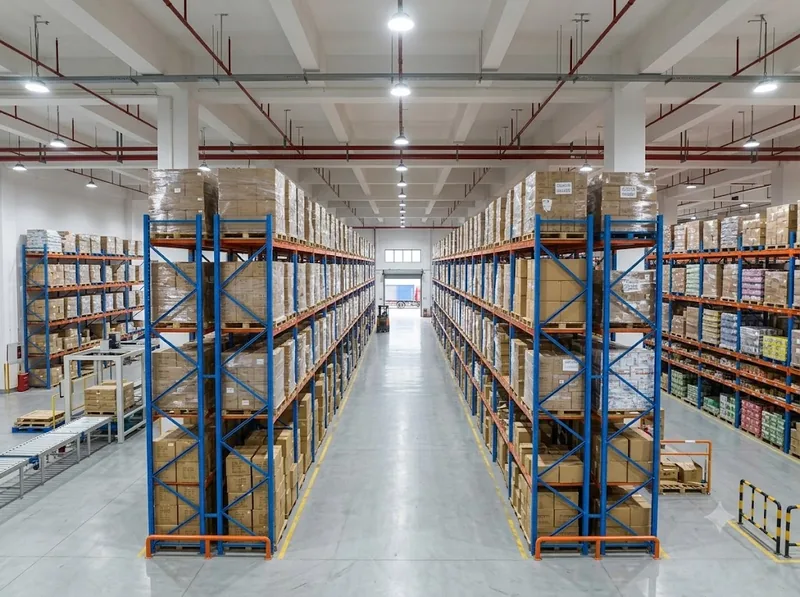 China fulfillment warehouse — picking, packing and shipping ecommerce orders
When Something Goes Wrong
Not every order moves through cleanly, and a fulfillment process is only as good as its exception handling. An order might get paused for an incomplete address, unavailable stock, or a shipping route that doesn’t accept the product — and it should be clear upfront who’s responsible for resolving that and contacting the customer. Post-dispatch issues — delays, damage, a customs hold, a return — need the same clarity: who approves a reshipment, what counts as evidence for a lost-parcel claim, and where a returned parcel actually goes (a local address, an overseas warehouse, or back to China, depending on the route and the product’s value). Agreeing on this before the first customer complaint arrives keeps warehouse staff, customer service and customers from getting three different answers to the same question.
China Fulfillment vs. Overseas Warehousing
These solve different problems, and the choice comes down to where your customers are and how predictable your demand is.
China fulfillment keeps inventory close to the factories and ships internationally as orders come in — useful for brands selling across several countries from one inventory pool, especially early on when it’s not yet clear whether demand will land hardest in the US, Europe or Australia. Splitting stock across overseas warehouses too early, before that’s known, tends to create overstock in one market and stockouts in another.
Overseas warehousing tends to win when most customers are concentrated in one market and fast domestic delivery matters more than anything else — a brand with steady US demand might import its bestsellers into a US warehouse for local delivery. The tradeoff is that it needs more accurate forecasting, since stock has to move before the actual orders exist.
Many established DTC brands end up running both: fast-movers sit in an overseas warehouse, while new products, low-volume SKUs, replacements and international orders get fulfilled from China.
Example: A DTC Order From Purchase to Delivery
A fashion accessories brand manufactures in China and sells through its own online store. Finished inventory arrives at HUIXIN’s Shenzhen warehouse, gets recorded by SKU, and arrival photos go up in the connected system. The brand’s custom retail boxes, thank-you cards and promotional gifts are stored alongside the main inventory under their own packing rules.
A customer in the US orders a handbag and a matching accessory. The order enters the fulfillment system, both SKUs are confirmed available, and an employee picks and verifies the correct color and variant. The handbag goes into its branded box with the accessory and gift, a thank-you card is added, and the set is packed into a lightweight outer carton. The system selects a small-parcel route based on destination and final weight, generates the label and customs declaration, and the tracking number is uploaded to the store once it ships. The brand never touches a warehouse, hires a packer, or compares shipping quotes — that’s all already handled.
What Does It Cost?
There’s no single number that applies across products and brands — the total spans receiving, storage, inspection, labelling, picking, packing materials, kitting, branded inserts and international shipping. A simple single-item order in standard packaging obviously costs less to handle than a multi-item bundle with a branded box and inserts, and storage cost scales with volume and how long stock sits before it moves (HUIXIN typically offers a month free, subject to the terms agreed with your rep).
Shipping is usually the largest line item, but it’s worth resisting the urge to compare rates in isolation — a cheap channel with poor delivery performance generates its own costs downstream, in refunds and reshipments. The number that actually matters is total cost per successfully delivered order, not the quoted shipping rate. Sharing realistic product dimensions, typical order combinations and destination markets upfront lets a provider quote the whole workflow instead of just a shipping line.
Common Mistakes Worth Avoiding
The most frequent one is treating fulfillment as an afterthought — waiting until production is finished to discuss packaging and dimensions, by which point they’re already locked in and possibly wrong for cross-border shipping. Close behind that: vague SKU naming that relies on photos or handwritten notes instead of a real barcode system, which is exactly where picking errors come from. Chasing the lowest shipping rate without weighing delivery stability and tracking quality tends to cost more later in customer-service time than it saves upfront. Oversized packaging quietly inflates volumetric weight on every single order. And special-product restrictions — batteries, liquids, cosmetics — need to be checked before goods enter the warehouse, not discovered afterward. Exception handling belongs on this list too: address errors, returns and low stock will happen, and it’s better to have the workflow agreed before the first one does.
How to Choose a Fulfillment Partner
Since a fulfillment partner is handling inventory and touching every customer order, the lowest quote shouldn’t be the deciding factor. Look for a warehouse that can identify incoming shipments cleanly, manage inventory by SKU, and give you accurate stock visibility — and ask directly how they handle quantity mismatches, damaged cartons or unlabelled goods. They should be clear about the difference between basic receiving and actual inspection, offer real packaging flexibility for branded materials and bundles, and support shipping routes that fit your main destinations and product types. As order volume grows, system integration starts to matter more than almost anything else — how orders get in, how tracking comes back, how inventory updates. And pricing across receiving, storage, pick-and-pack and shipping should be laid out clearly before your inventory ever arrives. For a practical example of how fulfillment and QC work together under one roof, read our detailed walkthrough of Shenzhen order fulfillment and QC inspection.
China Order Fulfillment with HUIXIN 3PL
HUIXIN 3PL runs warehouse and order fulfillment operations in Shenzhen for DTC brands, cross-border sellers and overseas businesses sourcing from China. Suppliers ship inventory directly to our warehouse, where it’s received, checked and stored by SKU — with sampling or full inspection, photography, labelling, kitting and Amazon FBA prep available depending on what you need, and arrival photos uploaded to a connected system so you can review remotely.
For DTC fulfillment specifically, our team picks and packs individual orders, adds your branded materials, and preps parcels for cross-border small-parcel shipping — letting you hold one central inventory pool in China while testing products or serving markets that don’t yet justify a local warehouse. Products with special storage or shipping requirements can also be handled, provided the right documentation and storage conditions are in place.
In short, HUIXIN functions as your warehouse and fulfillment team in Shenzhen, connecting your Chinese suppliers, inventory, online store and customers worldwide into one process. To get started, share your SKU structure, expected order volume, packaging requirements and main destinations, and we’ll put together a fulfillment plan around them.
Frequently Asked Questions
How does China order fulfillment work?
The supplier ships finished inventory to a China fulfillment warehouse, which receives, checks, labels and stores it by SKU. When a customer orders, the warehouse picks, packs and ships the parcel on a suitable route, then sends the tracking number back to the seller’s system.
Can Shopify orders be fulfilled directly from China?
Yes — inventory can be held in China and shipped to customers worldwide as Shopify orders come in, typically through a store integration, an API, or another agreed order-upload method.
How fast will orders be processed?
It depends on the warehouse agreement, daily cutoff times, and whether the order needs custom packaging or inspection. Worth confirming the processing schedule and service standard before fulfillment starts.
Can HUIXIN handle custom packaging and promotional inserts?
Yes — branded packaging, inserts, gifts, product bundles and kitting can all be built into the packing instructions.
Can batteries, liquids or other special products be fulfilled from China?
Often, yes, provided the required documents are in place and the warehouse can meet the storage and shipping conditions the product needs — worth confirming before the supplier ships.
Is China fulfillment cheaper than an overseas warehouse?
It depends on destination, parcel size, order volume and delivery expectations. China fulfillment avoids importing and splitting stock before demand is known; an overseas warehouse tends to make more sense when customers are concentrated in one market and fast local delivery is the priority.