Flexible warehouse storage in Shenzhen helps e-commerce sellers reduce inventory cost, manage seasonal demand, and improve global supply chain efficiency.
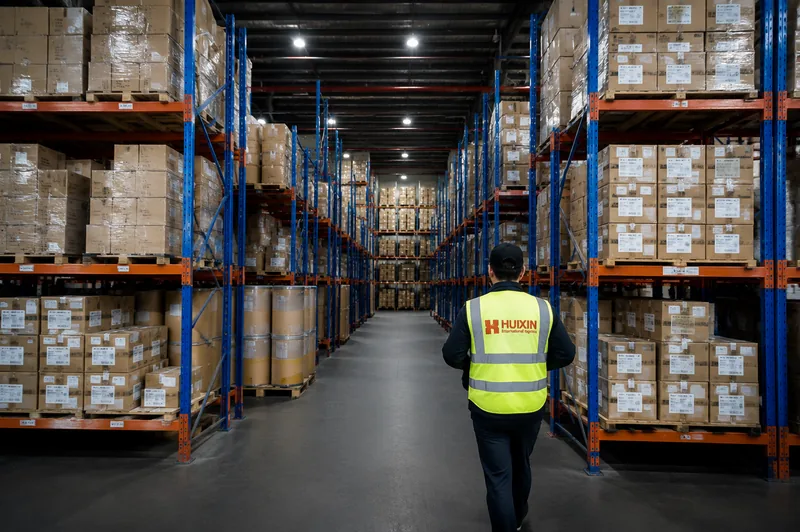 Shenzhen 3PL warehouse overview – HUIXIN e-commerce fulfillment center
Flexible Warehouse Storage in Shenzhen for E-commerce Inventory Optimization
Why E-commerce Brands Need Flexible Warehouse Storage in Shenzhen
For most cross-border e-commerce sellers today, the biggest challenge is not selling products—it is managing inventory efficiently across different markets. As advertising costs rise and customer expectations for fast delivery increase, holding stock in the wrong location can quickly turn into a cash flow problem. Many sellers continue shipping everything directly from factories in China to overseas warehouses or fulfillment centers, but this often leads to long lead times, high shipping costs, and unnecessary inventory risk. For more on cost-efficient China storage strategies, see our guide on warehousing and storage solutions.
This is where flexible warehouse storage in Shenzhen becomes strategically important. Instead of treating storage as a passive service, modern e-commerce sellers are using Shenzhen as an active inventory control point between factories and global markets. By positioning stock closer to manufacturing hubs, sellers can reduce the need for frequent small shipments and instead consolidate inventory intelligently before distributing it to the US, Europe, or other regions. In practice, this approach helps reduce overseas inventory cost and improves responsiveness during seasonal demand spikes such as Q4 sales or promotional campaigns.
More importantly, Shenzhen-based storage allows sellers to maintain a buffer between production and final delivery. This buffer reduces pressure on overseas warehouses, which are often expensive and inflexible. It also allows brands to react faster when demand suddenly increases, without needing to rush air freight from factories or overstock foreign warehouses.
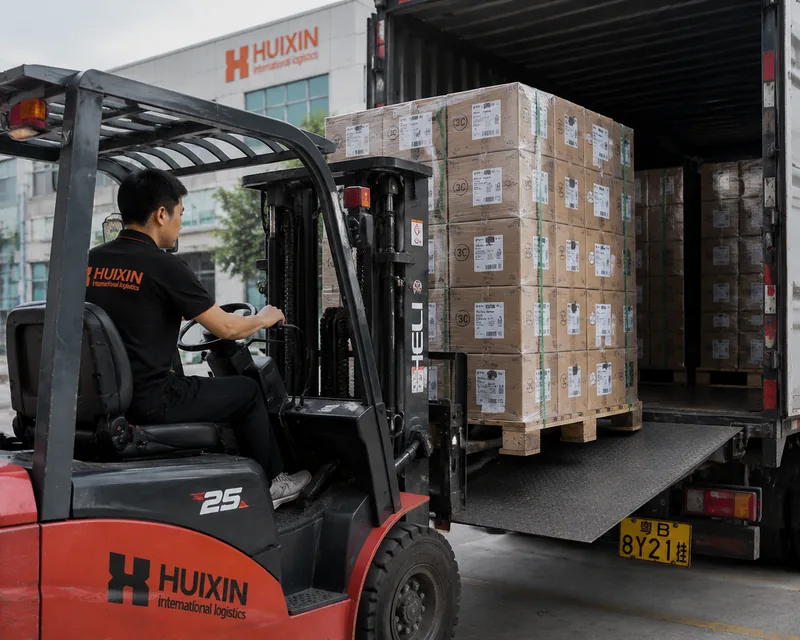 Shenzhen warehouse forklift loading operations at HUIXIN logistics center
What Is Flexible Warehouse Storage in China?
Flexible warehouse storage in China is not simply a physical space where goods are stored. It is better understood as a dynamic inventory management layer positioned close to manufacturing ecosystems, particularly in cities like Shenzhen. Instead of locking inventory into one fixed location or long-term contract, sellers can scale storage up or down based on real demand and sales velocity.
In this model, inventory is treated as a fluid asset rather than a static stockpile. Goods can be received in bulk from factories, temporarily stored, and then released gradually based on sales performance in different markets. For example, a Shopify store selling seasonal products might store inventory in Shenzhen for several weeks before gradually shipping batches to US or EU fulfillment centers depending on sales trends.
This flexibility is especially useful for fast-moving e-commerce businesses where SKU turnover is high and demand patterns are unpredictable. Rather than overcommitting inventory overseas, sellers can centralize stock in China and distribute it in a controlled, demand-driven way. This approach also reduces the risk of dead stock and improves overall capital efficiency.
Why Shenzhen Is the Core Hub for E-commerce Inventory Storage
Shenzhen plays a unique role in global supply chains because it sits at the intersection of manufacturing, technology, and export logistics. Most consumer goods produced in southern China are manufactured within a relatively short distance of Shenzhen, which means inventory can move from factory to warehouse extremely quickly without long inland transportation delays.
In addition, Shenzhen is directly connected to major export infrastructure such as Yantian and Shekou ports, as well as international airports handling high-frequency cargo flights. This combination of sea, air, and express logistics makes it one of the most efficient outbound hubs in Asia. For e-commerce sellers, this translates into faster replenishment cycles to Amazon FBA warehouses in the US and Europe, especially when stock needs to be restocked urgently.
Another important advantage is consolidation efficiency. Instead of shipping multiple small factory orders separately, sellers can aggregate inventory into a Shenzhen warehouse, reduce fragmented shipments, and then export in optimized batches. This significantly lowers logistics cost per unit and improves overall supply chain predictability.
Core Functions of Flexible Warehouse Storage
A modern Shenzhen flexible warehouse does far more than simply store products. It functions as an operational layer in the supply chain that connects production with global fulfillment.
When goods arrive from suppliers, they are typically checked for quantity and external condition before entering storage. This inbound inspection step helps reduce downstream issues such as defective products entering overseas fulfillment channels. Once stored, inventory is organized in a structured system so that different SKUs can be quickly located and released when needed.
Beyond storage, order fulfillment becomes a daily operational process. When an order is received from an e-commerce platform, products are picked from storage, packed according to the required specification, and prepared for international shipment. In some cases, products may also be bundled or kitted before shipping, especially when sellers offer multi-item sets or promotional packages.
Finally, the warehouse serves as a coordination point for cross-border shipping. Whether goods are being sent to Amazon FBA centers, Shopify customers, or regional distributors, Shenzhen acts as a staging hub that ensures consistent and efficient global outbound flow.
Short-term vs Long-term Storage Strategy
One of the key advantages of flexible warehouse storage is the ability to separate inventory strategy into short-term and long-term layers. Short-term storage is typically used for seasonal products or fast-moving SKUs where demand fluctuates rapidly. For example, products related to holidays or promotional campaigns may only need to be stored for a few weeks before being shipped out in bulk.
Long-term storage, on the other hand, is more suitable for stable products with predictable demand. These items act as buffer inventory, ensuring that sellers do not face stockouts when overseas demand increases unexpectedly. By combining both strategies, sellers can maintain a balance between inventory availability and capital efficiency.
In practice, this dual-layer approach allows businesses to avoid overstocking in expensive overseas warehouses while still maintaining enough inventory flexibility to respond to market changes quickly.
Business Benefits of Shenzhen Flexible Warehouse
The main advantage of using a flexible warehouse in Shenzhen is cost efficiency. By storing inventory closer to the production source, sellers can significantly reduce overseas storage expenses and avoid the high holding costs associated with US or European warehouses. At the same time, consolidating shipments in China reduces transportation fragmentation and improves freight efficiency.
Another important benefit is improved cash flow. Instead of locking large amounts of inventory in foreign markets, sellers can keep stock closer to factories and release it gradually based on real sales performance. This reduces financial pressure and lowers the risk of overstocking slow-moving products.
Operationally, flexible storage also improves fulfillment speed and reduces stockout risk. Because inventory is centrally managed and strategically distributed, sellers can respond more quickly to changes in demand and maintain more stable product availability across different platforms.
Who Should Use Flexible Warehouse in Shenzhen?
Flexible warehouse storage is particularly suitable for e-commerce brands that operate across multiple channels such as Amazon, Shopify, or TikTok Shop. These businesses often face unpredictable demand patterns and need a storage system that can adapt quickly.
It is also highly relevant for fast-growing direct-to-consumer brands that are scaling internationally. As order volumes increase, managing inventory across multiple countries becomes complex, and a centralized hub in Shenzhen helps simplify operations.
For cross-border wholesalers, Shenzhen storage provides a way to consolidate supply from multiple factories and redistribute inventory efficiently to global buyers. In general, any business that depends on Chinese manufacturing but sells globally can benefit from this model.
Shenzhen Warehouse vs Overseas Warehouse
The difference between a Shenzhen flexible warehouse and an overseas warehouse is mainly about cost structure and operational flexibility. Overseas warehouses are typically more expensive to maintain, with higher monthly storage fees and stricter contract requirements. They are also physically distant from manufacturing sources, which slows down replenishment cycles.
In contrast, Shenzhen warehouses sit directly within the supply chain origin point. This allows for faster restocking, lower storage costs, and significantly more flexible scaling. Sellers can increase or decrease inventory levels based on real demand rather than fixed capacity constraints, which is particularly important in volatile e-commerce environments.
How Shenzhen Flexible Storage Improves Global Supply Chain Efficiency
At a system level, Shenzhen flexible storage acts as a control hub between production and global demand. Instead of moving inventory in rigid, pre-planned batches, goods flow dynamically based on real-time sales performance. This reduces the traditional mismatch between supply and demand that often leads to either stockouts or overstocking.
By shortening the distance between factory output and global fulfillment, sellers can significantly reduce lead times and improve responsiveness. Over time, this creates a more stable and efficient supply chain where inventory risk is distributed more intelligently rather than concentrated in one market.
Shenzhen flexible storage helps e-commerce sellers reduce inventory risk and improve global supply chain efficiency.
FAQ
What is flexible warehouse storage in China?
It is an adaptive inventory management system located near manufacturing hubs like Shenzhen, allowing e-commerce sellers to store, manage, and distribute stock based on real demand rather than fixed storage constraints.
How does Shenzhen warehouse storage reduce costs?
By consolidating shipments near factories and reducing reliance on expensive overseas warehousing, sellers can lower both storage and transportation costs while improving shipment efficiency.
Can I store seasonal inventory in Shenzhen?
Yes, many sellers use Shenzhen storage as a buffer for seasonal products, allowing them to scale inventory up or down depending on demand cycles.
What is short-term warehouse storage in China?
It refers to temporary storage used for fast-moving or seasonal inventory before distribution to overseas markets or fulfillment centers.
How fast is fulfillment from Shenzhen?
Fulfillment speed depends on destination and shipping method, but Shenzhen’s proximity to major ports and airports allows for relatively fast global dispatch compared to inland warehouses.