Shenzhen shipping hub offers air, sea, and express logistics with DDP shipping options, enabling fast and cost-efficient cross-border delivery to US and EU markets.
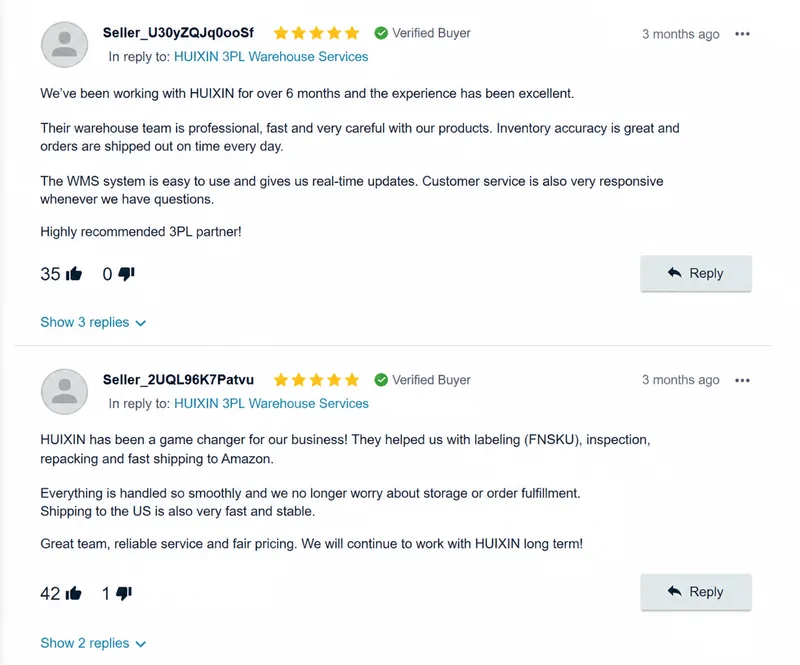 HUIXIN 3PL customer reviews for logistics and fulfillment services
Global Shipping & Last Mile Delivery from Shenzhen China for E-commerce Brands
Why Shenzhen Is a Global Shipping Hub for E-commerce Logistics
For cross-border e-commerce brands, Shenzhen is not just a warehouse location—it is the starting point of global distribution. Most products manufactured in China’s southern industrial belt naturally flow into Shenzhen before entering international markets. This creates a highly efficient logistics ecosystem where inventory can be consolidated, processed, and dispatched to global destinations with minimal delay. For platform-specific shipping strategies, see our small parcel shipping from China guide.
The real advantage of Shenzhen lies in its integration with major export infrastructure. Ports such as Yantian and Shekou handle a large volume of container shipments daily, while Shenzhen’s international airports support high-frequency air cargo routes to the US, Europe, and Southeast Asia. For e-commerce sellers, this means inventory stored in Shenzhen can be routed flexibly depending on urgency, cost, and destination requirements. Instead of treating shipping as a fixed process, Shenzhen enables it to function as a dynamic decision point within the supply chain.
In practice, this positioning allows sellers to optimize both speed and cost. Goods can be consolidated in Shenzhen, then dispatched in bulk via sea freight for cost efficiency, or quickly shipped via air or express when demand requires faster replenishment. This flexibility is what makes Shenzhen a core node in global e-commerce logistics.
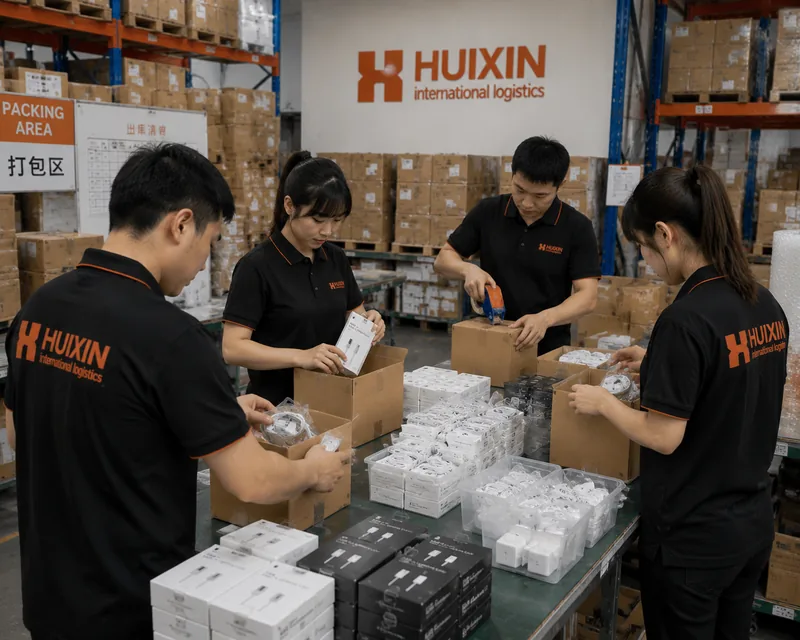 E-commerce warehouse team packing electronics at HUIXIN fulfillment center
Air vs Sea vs Express Shipping: Understanding the Trade-off
Global shipping from China is typically built around three main transportation modes, and each one serves a different strategic purpose in e-commerce operations.
Sea freight is the most cost-efficient option and is commonly used for bulk shipments. It is ideal for stable inventory planning where lead time is not critical. While transit times to the US or Europe can range from several weeks, the cost per unit is significantly lower, making it suitable for large-volume replenishment cycles.
Air freight offers a balance between speed and cost. It is often used for mid-priority shipments where inventory needs to be restocked faster than sea freight allows, but without the premium cost of express services. Many Shopify and Amazon sellers rely on air freight during product launches or seasonal spikes when timing is critical.
Express shipping, such as DHL or UPS, is the fastest but also the most expensive option. It is typically used for urgent replenishment or small-batch shipments. In e-commerce operations, express shipping is often reserved for high-value SKUs or emergency stock situations where delays could directly impact sales performance.
Rather than choosing one method, most successful sellers use a combination of all three, dynamically adjusting based on demand and inventory positioning in Shenzhen.
DDP Shipping from China: Simplifying Cross-Border Logistics
For many international sellers, one of the most complex parts of global logistics is customs clearance and import compliance. This is where DDP (Delivered Duty Paid) shipping from China has become an increasingly important solution.
With DDP shipping, the logistics provider handles transportation, customs clearance, duties, and final delivery in the destination country. This means sellers can treat cross-border shipping as a single, predictable cost rather than managing multiple fragmented logistics steps. For e-commerce brands operating on Amazon, Shopify, or TikTok Shop, this significantly reduces operational complexity and allows them to focus more on sales and marketing rather than logistics coordination.
From a Shenzhen shipping center, DDP routes are commonly structured through consolidated air or sea shipments, depending on urgency and cost requirements. This model is particularly effective for brands scaling internationally, as it provides a stable and transparent delivery framework across different markets such as the US and EU.
Shenzhen Port Advantage: Yantian and Shekou in Global Trade Flow
Shenzhen’s logistics strength is deeply tied to its ports, especially Yantian and Shekou, which serve as major gateways for international container shipping. Yantian Port is known for handling large-scale ocean freight operations, making it ideal for cost-efficient bulk export. Shekou Port, on the other hand, offers more flexible routes and faster processing for mixed cargo types.
This dual-port system gives Shenzhen a unique advantage in global supply chain design. Depending on product type, urgency, and shipping budget, sellers can choose the most appropriate export route without relocating inventory. Combined with nearby warehousing infrastructure, this creates a highly responsive cross-border logistics environment.
For e-commerce businesses, this means inventory does not sit idle waiting for a single shipping channel. Instead, Shenzhen acts as a multi-path distribution hub where goods can be dynamically routed based on global demand conditions.
Last Mile Delivery Expectations for E-commerce Platforms
While Shenzhen handles the outbound logistics stage, the final delivery experience is defined by last mile performance in destination countries. For platforms like TikTok Shop, Shopify, and Amazon, delivery speed has become a critical factor in customer satisfaction and conversion rates.
In most cases, last mile delivery is handled by local carriers in the destination country after customs clearance. The expectation from global e-commerce buyers is increasingly aligned with fast, trackable, and predictable delivery windows, often within 3–10 days depending on shipping method and region.
This creates a direct link between Shenzhen shipping strategy and customer experience. Faster air or express routes from Shenzhen improve last mile performance, while cost-efficient sea freight is typically used for less time-sensitive orders. The key is not choosing one model, but aligning shipping strategy with platform expectations and product positioning.
Cost vs Speed Trade-off in Global Shipping Strategy
One of the most important decisions in cross-border logistics is balancing cost and speed. Sea freight offers the lowest cost per unit but requires longer lead times, making it more suitable for stable inventory cycles. Air freight increases cost but significantly improves delivery speed, which is often necessary for fast-moving products or seasonal demand. Express shipping provides maximum speed but is usually reserved for high-margin or urgent shipments due to its premium pricing.
In practice, most e-commerce brands operating from Shenzhen use a hybrid strategy. Core inventory is shipped via sea freight to reduce overall logistics cost, while air freight is used to respond to demand fluctuations. Express shipping serves as a supplementary channel for urgent replenishment.
This layered approach allows sellers to maintain both profitability and responsiveness, which is essential in competitive global e-commerce environments where customer expectations continue to rise.
FAQ
What is a China international shipping warehouse?
It is a logistics hub located in China where goods are consolidated, stored, and shipped internationally through different transport methods such as sea, air, or express delivery.
Why is Shenzhen a major shipping center for e-commerce?
Because it is located near manufacturing hubs and major ports like Yantian and Shekou, allowing fast consolidation and efficient global export operations.
What is DDP shipping from China?
DDP (Delivered Duty Paid) shipping means the logistics provider handles transportation, customs clearance, duties, and final delivery to the destination country.
How does last mile delivery work for cross-border orders?
After goods clear customs in the destination country, local carriers handle final delivery to the customer’s address.
Which shipping method is best for e-commerce sellers?
There is no single best option. Sea freight is best for cost efficiency, air freight balances speed and cost, and express shipping is used for urgent or high-value shipments.