See how HUIXIN 3PL receives, checks, sorts, repacks and labels clothing inventory in China before storage and global order fulfillment.
From Factory Cartons to Ready-to-Ship Orders: A Real Apparel Fulfillment Case in China
This is a real apparel fulfillment case from HUIXIN 3PL. The client’s finished garments arrived at our China warehouse directly from the factory, and our team took the shipment from there — checking it in, sorting it by SKU, inspecting the packaging, folding and repacking the approved garments, applying labels, and organizing the inventory for storage and international order fulfillment. The goal was never just to put clothes into new bags; it was to turn a factory shipment into inventory the client could see, trust, and fulfill orders from with confidence.
Client Background: The Apparel Fulfillment Challenge
Apparel inventory is more complicated than it looks from the outside. A single clothing design can span several colors and multiple sizes, and even garments that look nearly identical on a shelf may belong to entirely different SKUs once color, size, and label requirements are factored in. A factory is built to manufacture those garments — it is not necessarily set up to manage long-term inventory, fulfill individual e-commerce orders, or apply different packaging for different sales channels. That gap is exactly what creates risk for an international seller once goods leave the production line:
- The factory may send the wrong quantity — a shipment count that doesn’t match what was ordered, discovered only after arrival.
- Different sizes or colors may be mixed together — making it hard to know exactly what’s in stock without resorting.
- Size labels may not match the actual products — a risk that turns into a wrong shipment the moment an order is picked.
- Polybags may be damaged during factory packing or transportation — affecting how the product looks by the time it reaches a customer.
- Products may arrive without the required SKU or barcode labels — making the goods unsellable on a given channel until relabeled.
- Incorrect variations may be picked when orders are processed — the end result of any of the problems above going unresolved.
This is the gap a China 3PL is meant to close: taking a factory shipment and turning it into inventory that is verified, organized, and ready to fulfill, rather than simply moving cartons from a truck into a storage rack.
Receiving and Checking the Factory Shipment
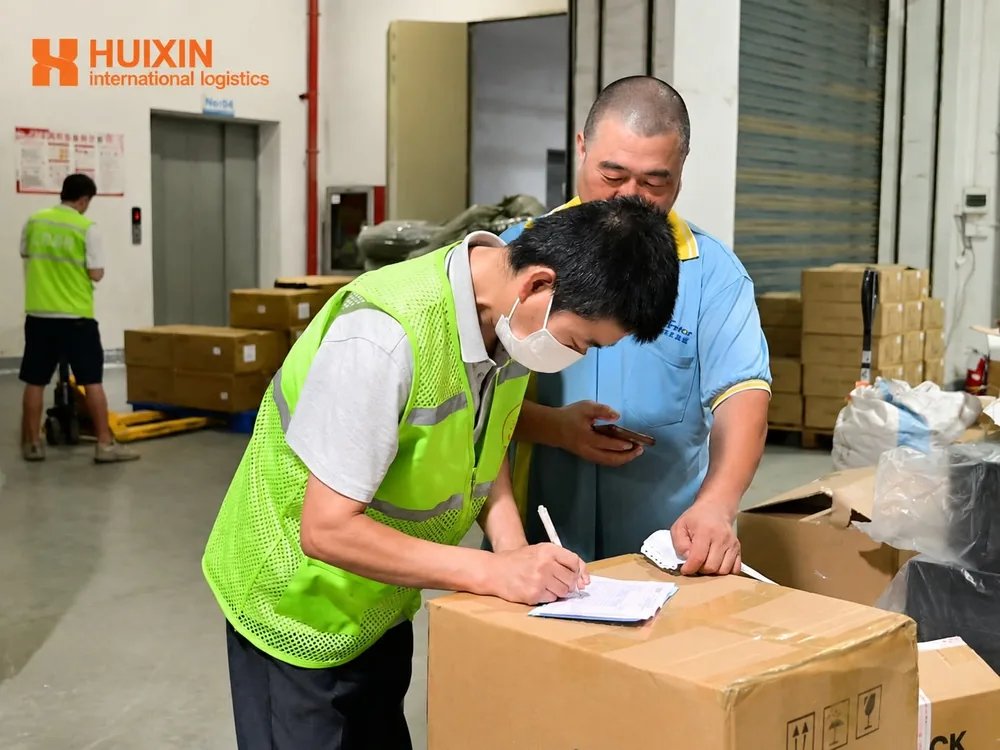 Checking apparel cartons during warehouse receiving
When the garments arrived at the HUIXIN warehouse, the first step was not to move the cartons straight into storage. Our team received the shipment as a specific inbound batch — distinct from any future delivery — and checked it against the information the client had provided, including the carton count and the factory’s packing list. This step exists because a packing list should never be treated as the final inventory record on its own: a factory stating that 500 garments were shipped says nothing about how those 500 pieces divide across SKUs, and a warehouse that skips this check has no way of catching a shortage or a mixed-up size before it becomes the client’s problem.
Sorting Inventory by SKU
A general product name like "300 T-shirts" tells a seller almost nothing useful. Once the shipment was checked in, the garments were separated by the variations that actually matter for fulfillment — style, color, and size, along with any other attribute relevant to the client’s products, such as gender, fit, or sales-channel barcode. Organizing inventory this way before it enters storage is what prevents similar-looking products from getting mixed together later, and it is essential for any seller running a Shopify store, Amazon listing, or TikTok Shop, where every variation is its own SKU with its own stock count. Without this step, "inventory" is just a total number; with it, the client can see exactly how many black medium shirts or blue extra-large shirts are actually on the shelf.
Inspecting the Garments and Handling Exceptions
Inspection scope varies by client — some only need a basic receiving check, while others require a more detailed review before goods are approved for sale. For this project, the work centered on verifying that products matched the client’s fulfillment and packaging requirements before repacking. Depending on what a client asks for, that check can extend to:
- Product style, color, and size label — confirming the physical garment matches what it’s supposed to be.
- Care and brand labels, logo placement, printing or embroidery — catching factory errors before they reach a customer.
- Visible stains, fabric damage, loose threads, or open seams — quality issues that affect whether a piece is sellable as-is.
- Damaged polybags or incorrect/missing barcodes — packaging problems that need fixing before storage.
Defining this scope in advance matters, because a basic receiving check is not the same service as a full piece-by-piece inspection, and a client should know exactly which defects the warehouse is checking for and how results will be reported.
Isolating and Reporting Abnormal Products
Not every unit that comes off a truck is ready for storage. When the warehouse found an incorrect size, a damaged bag, a missing label, or a quantity difference, those units were pulled aside rather than mixed in with approved stock, and the issue was recorded and reported back to the client. This matters because it keeps the decision where it belongs — with the client, not the warehouse. Depending on the problem, a client might choose to accept the units as sellable, have them relabeled or repackaged, send them back to the factory, keep them as secondary-grade stock, or set them aside as samples. Whatever the decision, having a documented exception — rather than a silent adjustment to the stock count — is what lets a seller trust the inventory number they’re looking at.
Repacking and Labeling for Storage
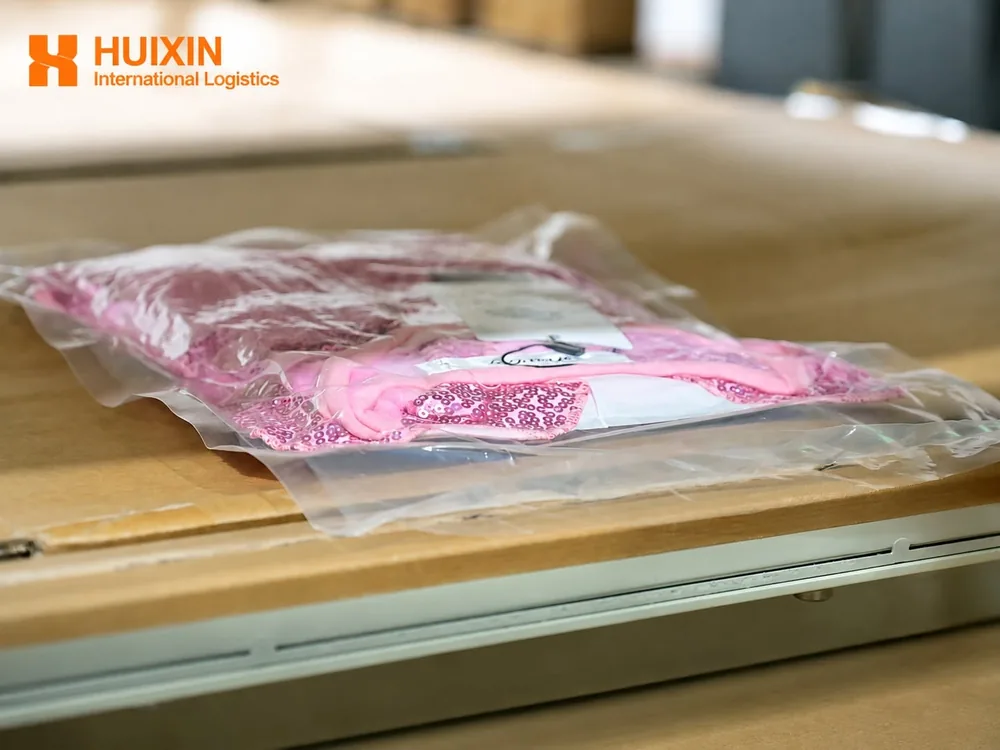 Repacking clothing inventory for apparel fulfillment
Once garments were approved, our team moved on to folding, repacking, and labeling — the stage where the inventory actually becomes presentable and traceable.
Packaging and Labeling
Folding and bagging might look like simple warehouse work, but consistency here affects package appearance, shipping volume, barcode visibility, and ultimately what a customer sees when they open the box. For clients with specific presentation requirements, the warehouse can prepare one packaging sample first — confirming folding method, polybag type, and label position — before processing the rest of the batch, which keeps the whole run consistent instead of leaving folding style to whoever is working that day.
Labeling is where a physical garment gets connected to the client’s inventory system and sales channel, and it is also where a small mistake causes a real problem — the correct garment recorded under the wrong SKU, or a barcode that doesn’t match the size and color it’s stuck to. Before applying any label, the warehouse needs clear instructions on which label belongs to which product, where it should sit, and whether an existing factory barcode needs to stay visible or be covered. The label isn’t considered correct just because a barcode is present — it has to match the exact style, color, and size of the garment it’s on.
Traceable Inventory and Order Fulfillment
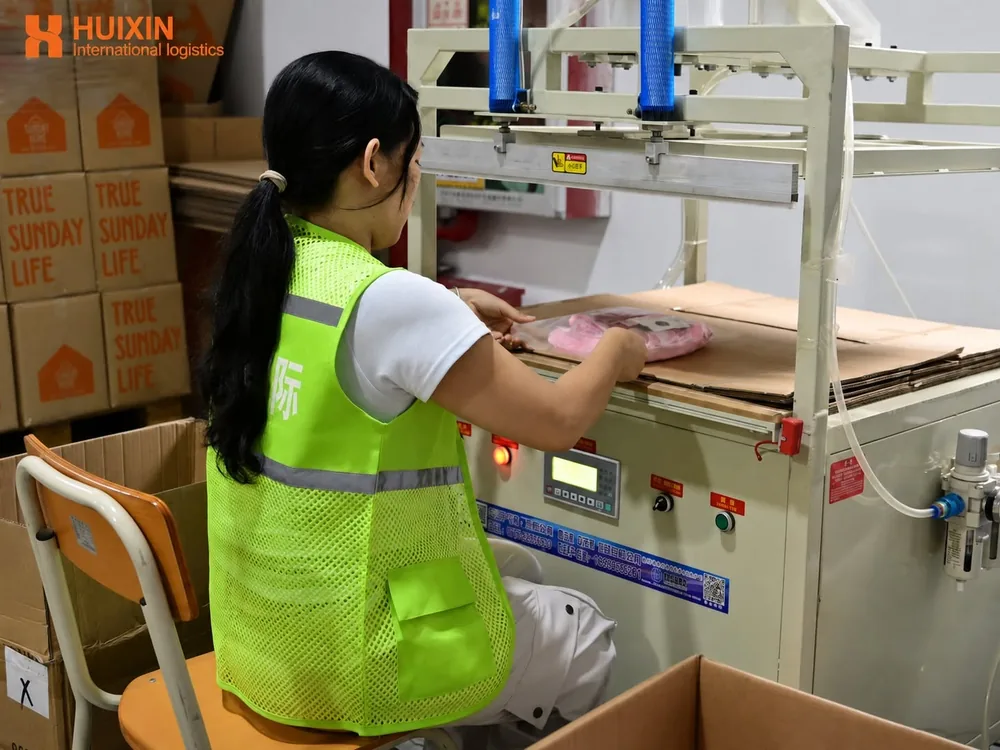 Repacked garment in protective polybag ready for fulfillment
With garments sorted, inspected, repacked, and labeled, the inventory was organized into clearly identified storage locations — at which point "inventory" stops being one total number and becomes something the client can actually query: which batch a product came from, how many units were approved, what was repacked, what was placed on hold, and whether any quantity was adjusted and why. That last point matters as much as the count itself — if a quantity changes because of damage, a miscount, or a return, the reason gets recorded rather than the stock number simply changing on its own.
That same organization carries through to outbound fulfillment. Because every variation was already sorted by SKU, picking an order means matching the style, color, size, quantity, and label against what the customer actually ordered — checked using barcode scanning where available, or a clear manual verification process where it isn’t, since two garments can look nearly identical while belonging to different sizes entirely. From there, orders are packed, shipping labels applied, and tracking information recorded, with the shipping method itself — direct-to-customer, bulk to an overseas warehouse, or another channel — depending on the destination, parcel weight, order volume, and the client’s own sales platform requirements.
| Stage |
What Happens |
Problem It Solves |
| Receiving |
Shipment checked in as a batch and verified against the factory packing list |
Confirms what actually arrived instead of trusting the paperwork alone |
| SKU sorting |
Garments separated by style, color, size and other required attributes |
Turns a generic quantity into inventory the client can actually count on |
| Inspection |
Garments and packaging checked against agreed scope |
Catches defects and mismatches before they reach storage |
| Exception handling |
Abnormal units isolated, recorded and reported to the client |
Keeps decisions with the client instead of hidden adjustments |
| Repacking & labeling |
Approved garments folded, packaged and labeled to spec |
Makes inventory presentable, sellable and correctly identified |
| Storage & tracking |
Inventory organized into identified locations with recorded changes |
Gives the client a traceable, queryable stock record |
| Picking & shipping |
Orders matched by SKU, packed and shipped to the right channel |
Reduces the risk of shipping the wrong variation |
Staying in Control After Outsourcing
The concern most sellers have about outsourcing fulfillment is losing visibility into their own products — not knowing when a shipment arrived, whether it was correct, or what happened to a unit that didn’t pass inspection. Sending this shipment to HUIXIN 3PL gave the client a control point between production and final delivery instead of that blind spot: goods were received, separated, repacked, and organized before any customer order was shipped, and any problem could be caught while the inventory was still in China and close to the original supplier, rather than after a customer complaint. That is the practical value of working with a China 3PL for apparel — the warehouse isn’t just a place where cartons sit; it becomes the operational link between the factory, the seller’s inventory, and the final customer.
What to Check When Choosing a China Apparel 3PL
Before sending clothing inventory to any warehouse, it’s worth confirming whether the provider can explain its fees, prove what happened to the stock, and manage exceptions properly — general claims of being "fast" or "professional" don’t answer any of that.
| Question |
Qualified Performance |
Warning Sign |
| Can the warehouse explain each fee? |
Provides rates for receiving, storage, inspection, repacking, labeling and outbound handling |
Only provides one unclear price per order |
| Can it prove that the goods arrived? |
Provides receiving records, carton counts, photos or batch information |
Only says that the goods were received |
| Can it manage apparel variations? |
Records inventory by style, color, size and other required attributes |
Manages all products under one general name |
| Can it handle inbound differences? |
Separates and reports shortages, incorrect sizes, damage and packaging issues |
Places all products into stock without reporting problems |
| Can it verify packaging and labels? |
Uses client instructions or an approved packaging sample |
Changes packaging or labels without approval |
| Can it reduce picking errors? |
Checks the style, color, size, quantity and SKU before shipping |
Relies only on staff memory |
| Can it explain inventory adjustments? |
Records the reason for recounts, damage, loss or other changes |
Changes inventory quantities without a clear record |
| Can it manage returns? |
Records the returned product, condition, SKU and recommended action |
Places returned products directly back into stock |
| Can it support growth? |
Offers a trial process, capacity planning and additional shipping options |
Promises unlimited capacity without operational details |
| Can the client safely end the cooperation? |
Explains inventory release, data export, transfer timing and related fees |
Has unclear termination fees or no stock-release timeline |
HUIXIN 3PL Apparel Fulfillment Services
HUIXIN 3PL supports international sellers sourcing clothing and other products from Chinese factories. Depending on a client’s requirements, our apparel fulfillment services can include:
- Receiving from multiple suppliers, with carton and quantity checking — verifying shipments as they arrive, batch by batch.
- SKU sorting and basic or detailed inspection — organizing inventory by style, color and size, with inspection depth matched to what the client needs.
- Folding, repacking and polybag replacement — bringing garments to a consistent, sellable presentation.
- SKU and barcode labeling, plus custom inserts — connecting each physical garment to the correct inventory record and sales channel.
- Inventory storage and order picking and packing — keeping stock organized and ready for outbound orders.
- Direct-to-customer and bulk shipping to overseas warehouses — supporting different fulfillment models depending on the sales channel.
- Return receiving and inspection — applying the same recorded, verified process to goods coming back into the warehouse.
Each project is configured around the client’s product, order volume, sales channel and inspection requirements, rather than run through one fixed process regardless of what the client actually sells.
Conclusion
For apparel fulfillment, getting a garment to a customer correctly means far more than shipping a piece of clothing — the style, color, size, quantity, packaging and label all have to match both the seller’s inventory records and the customer’s order. In this case, HUIXIN 3PL turned a factory shipment into organized, repacked, ready-to-fulfill apparel inventory by building a clear, recorded process across receiving, sorting, inspection, repacking, labeling, storage and outbound fulfillment. That process is what let the client keep real visibility and control after handing fulfillment off to a warehouse thousands of miles away.
Learn more about our China warehousing and fulfillment services at china-3pl.com.